☑️ What is polyurethane or polyurethane?
This product is a chemical product that contains a structure of urethane bonds in its composition, which can show many characteristics. In fact, this product is in the form of various products such as:
Soft and hard foams
the movie
Elastomers
Thermoplastic
powders
Liquids such as resin and paint
Cover insulation
emulsion
It is produced and can have many uses.
☑️ How to produce polyurethane compounds
combining this product with other materials such as polyurea can produce very useful polymers that today specialists have been able to use many they have For example, transparent coatings for single-layer insulation for roofs or making colors for pedestrian crossings are examples of the use of these compounds.
☑️ Polyurethane Properties
This chemical is the only member of the polymer family that has multipurpose properties. With properties such as elastomeric, adhesion, etc., it has various applications in different industries and they are used in mattresses, insulation, coatings, paint, elastomers, toys, synthetic fibers, etc.
☑️ Hardness
One of its important properties is its hardness. Hardness expresses the degree of resistance of a polymer against the collapse of a solid object. The hardness of polyurethane is reported by the Durometer standard, which has two categories, A and D.
☑️ Polyurethane Production
Polyurethane or pu is created from the reaction of diisocyanates and DL. Two monomers, diisocyanate and DL, participate in this reaction. Since different types of isocyanates and DLs participate in this reaction, different polyurethanes with different properties are made.
In some cases, dialcohol is replaced by diamine, and the produced polymer becomes a polyurea. This polymer consists of urea bonds. These compounds are also called polyurethane. Polyurethanes have a high ability to establish hydrogen bonds, so they are very crystalline and are used in making soft rubbers and copolymers.
☑️ Difference of Polyurethane Foam Type B2, B1 and B3
Polyurethane foams are divided into three categories in terms of chemical composition: non-flammable (B1), slow-burning (B2) and flammable (B3).
B1 foam has a very good resistance to fire and does not burn.
B2 foam is self-extinguishing against fire and shows good resistance.
B3 foam has poor resistance and ignites due to fire.
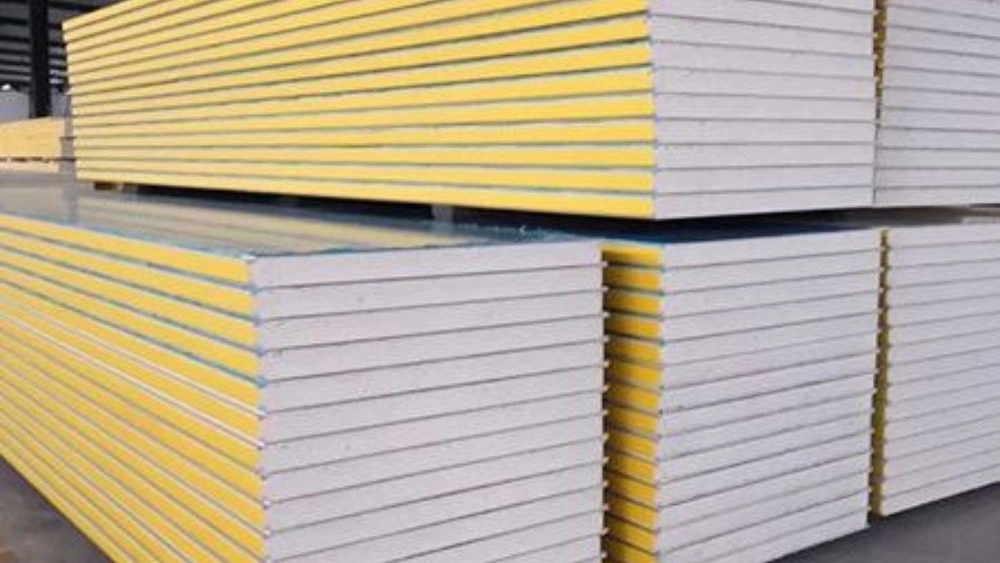
Since the production of sandwich panel with B1 polyurethane foam is not economical in Iran, therefore this product will not be economical for the consumer and producer. Currently, it is possible for some manufacturers to produce sandwich panels with PIR foam in Iran. This type of foam can withstand more fire, but it cannot be considered the same as B1 foam.
Finally, according to the current conditions and facilities, if it is not possible to access B1 or PIR panel, preparing a sandwich panel with B2 foam is the best option and in most cases it meets the needs of customers.
☑️ Polyurethane application in medicine
Important uses of this product in the medical industry are the production of implantable organs, which are usually used in artificial hearts, artificial pancreases, blood vessels Artificial teeth and artificial gums are a suitable substitute for spongy bones, blocking vessels, tricuspid valves and many other uses.
☑️ Other applications of polyurethane
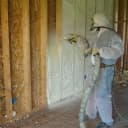
One of the most important uses of this chemical product in today's world is building insulation against moisture, heat and noise. Of course, another application of this product is to cover pipes buried under the soil for protection against corrosion, this extraordinary insulation can be used to maintain the high temperature of some pipelines or to repair some external coatings. Note that because isocyanate compounds can release toxic substances, this product should never be used for internal coatings. In short, it can be used in other cases such as: Water tanks Sewerage channels Hall flooring Sidewalks Seam of prefabricated parts Preparation of shoe soles And... it had many uses. It is also good to know that these types of foams are also used today to make foam chairs and produce furniture. In addition, polyurethane is a suitable material for thermoplastics used in medical equipment, and it is also used as a waterproofing and sealant in the automotive industry and flooring production.
☑️ How to use
In general, this product is used in two forms, open cell and closed cell, each of which can have specific characteristics. be and be used in different forms in parts of different industries.
☑️ Benefits of Polyurethane
Products made of polyurethane can have many advantages such as:
Very light weight
Easy and fast shipping
Can be used in various cases
Repairability
No cracking and wear
No color change with high durability
Quick and easy installation
Lighting capability
The possibility of painting with plastic and acrylic paints
Low water absorption
The price is right
High strength
Preventing the release of toxic gases
Polyurethane has different types as follows:
Semi-soft polyurethane foam
This foam is made from a combination of polyester and isocyanates in a known ratio. By changing the formulation of this foam, its properties will also change.
Soft polyurethane foam
Soft polyurethane foam is some block copolymers whose flexibility is based on phase separation between hard and soft parts. These foams have characteristics such as density, strength, tear resistance, durability, flammability and surface tension.
Soft polyurethane foams have applications as follows:
For all kinds of products, including bedding
Furniture
Car interior
carpet underlay
packing
Hard polyurethane foam
Rigid foams are one of the most popular energy insulators in the world. These foams significantly reduce energy costs, while also making residential and commercial environments more comfortable.
The use of this foam is as follows:
They are used to maintain a uniform temperature and reduce the sound level in homes, commercial centers and other work environments.
These foams are effective insulators that are used in roof and wall insulation, windows, doors and sealants.
Rigid foams can be produced using petroleum-based and bio-based polyols. The hydroxyl group in polyols causes the characteristics of the formulated polyurethane.